15% Off Our Entire Suite of Hurricane Solutions — Ends Soon | View Offer Today!


Accordion Hurricane Shutters in South Florida


Protective Accordion Shutters for Any Home or Business
Accordion hurricane shutters protect the openings that are hardest to cover on a South Florida home: sliding glass doors, wide windows, balconies, and lanais. They stay mounted beside the opening year-round, then slide closed and lock in under a minute when a storm approaches. Castle Impact Windows Doors & Shutters manufactures accordion shutters in-house, installs them across Palm Beach, Broward, and Martin counties, and provides accordion shutter repair for systems we built and systems we did not.
Folding storm protection is where our company began. We started in 1969 as Folding Shutter Corporation, and more than five decades later, accordion shutters are still one of the products we know best. We design them, build them, install them, and repair them, so every part of the process stays with one team.

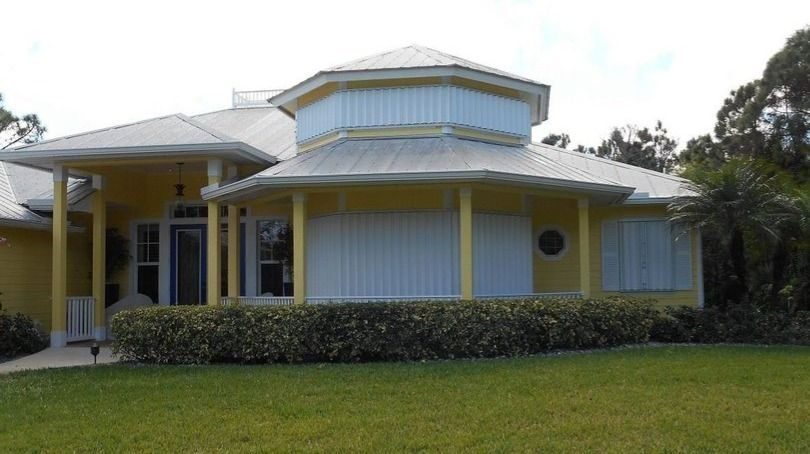

Why Accordion Shutters Became a South Florida Standard
Before permanently mounted shutters were common, most homeowners in the region relied on removable storm panels. Panels have to be stored, carried, and bolted on one at a time, and that work usually happens in the heat while a storm is already approaching. Accordion shutters changed that by keeping the protection on the house, folded neatly beside each opening until it is needed.
That convenience matters most when storms do not follow the forecast. In 2026, the Atlantic’s first hurricane did not form until October, and long quiet stretches are exactly when panels get misplaced and storm plans get skipped. Accordion shutters are always in place, so protecting your home comes down to sliding the blades across and turning a key.
How Accordion Hurricane Shutters Work
An accordion shutter is a row of vertical blades joined by hinges, so the whole assembly folds like an accordion. When it is open, the blades stack compactly against the wall. When it is closed, they spread across the opening and lock into place. Each shutter is built from a few key components:
-
Blades: interlocking vertical panels that cover the glass and take the impact of wind-borne debris
-
Top and bottom tracks: channels that guide the blades and carry the wind load into the structure
-
Wheels or rollers: let the shutter glide closed with one hand
-
Center mate and lock: join the sections where they meet and secure the shutter closed
The tracks are the backbone of the system. Once the shutter is closed, wind pressure on the blades transfers through the tracks into the wall and floor, so track strength and anchoring decide how well an accordion shutter performs in a storm. Because we manufacture our own accordion components, we build reinforced tracks and secure locks into every shutter.
One-Way and Bi-Parting Layouts
A one-way accordion shutter closes from one side of the opening to the other. It suits openings with wall space on only one side, such as a slider set close to a corner. A bi-parting shutter splits in the middle, with two stacks that slide toward each other and meet at the center.
On wide sliders, bi-parting layouts are usually the better choice. Each stack is smaller, the shutter looks more balanced when open, and closing is faster because each half travels a shorter distance. We plan the layout around the wall space on each side and how you use the doorway every day.
Inside or Outside Operation
Accordion shutters can be set up to operate and lock from inside the home or from outside, and the operating side is chosen when you order. Inside operation means you can close the shutter without stepping into the weather, which makes it the common choice for upper floors, condo balconies, and bedrooms.
Outside operation works well on ground-floor openings that are easy to reach, such as a slider opening onto a patio. Either way, we show you how to work the locks at installation and recommend keeping the keys where you can find them after a long off-season.
Window Vents for Daylight
Accordion blades are solid, so a closed shutter blocks most daylight. That is fine for an empty house, but it can make a living room feel like a cave if you are riding out a storm at home. We offer window vents in the blades that let daylight into the room while the shutter stays closed and locked.
Vents are worth adding to the openings in rooms you plan to use during a storm, such as the main living area or kitchen. For bedrooms, garages, and rooms you will not use, standard solid blades are usually all you need.
Where Accordion Shutters Work Best
Accordion shutters are built for spans that other shutter types struggle to cover. Sliding glass doors are the most common application, since they are often the largest openings on the house and face pools and patios where wind has room to build. Many older homes in the region still have their original sliders with single-pane glass, which makes protecting them a priority.
They also pair well with wide horizontal roller windows, which slide sideways and often span much of a wall in older ranch-style homes. Large picture windows facing a yard, pool, or water view are another strong match, along with storefronts that need to close quickly at the end of a business day.
Arched Windows and Curved Tracks
Accordion shutters are not limited to rectangles. We build accordion shutters with curved or shaped tracks that follow the line of an arched window or entry, so the shutter covers the glass all the way to the top of the curve instead of leaving a gap. Arched openings are common on Mediterranean and Spanish-style homes throughout the region, and each one is measured and designed individually.
If you would rather keep a slider open to the breeze year-round without any shutter at all, impact doors remove the closing step entirely. We are glad to compare both options for the same opening so you can choose what fits the way you live.
Accordion Shutters for Condos, Balconies, and High-Rises
Accordion shutters are one of the most common storm protection choices in South Florida condominiums. On a balcony, they can enclose the entire space instead of covering each door and window behind it. That protects all the glass at once and gives patio furniture a sheltered place during a storm, so you are not hauling chairs and planters indoors every time a system heads toward the coast.
High-rise installations need extra attention. Wind loads increase with height, corner units face higher pressures than mid-building units, and each opening has to be reviewed for the pressure it will actually see. Those factors can affect track fastening and how wide a single accordion shutter can span.
Many associations are also reviewing opening protection right now. Florida’s condominium milestone inspections and structural integrity reserve studies, with key deadlines at the end of 2026, include windows and exterior doors, and many boards are planning shutter projects as part of that process. Our condominium shutter team prepares the engineering sheets, product approvals, and color and hardware options boards typically ask for.
Built for Sand, Salt, and Afternoon Storms
The bottom track is where an accordion shutter lives or dies. It sits on the floor, threshold, or a short curb, and on pool decks and patios it collects sand, leaves, and salt residue that wash in with every afternoon thunderstorm. On beachfront and barrier island homes, wind blows sand into the track almost constantly.
We plan bottom tracks with foot traffic and drainage in mind and mount them on tile, pavers, or concrete as each opening requires. Pavers set on sand often need anchors that reach the slab or footing below, since pavers alone can shift under load. On homes near the ocean or the Intracoastal, we use hardware selected for constant salt exposure.
Accordion shutters do not need much upkeep, but the little they need makes a real difference. A few simple habits keep them gliding smoothly for years:
-
Vacuum the bottom track each spring, then rinse it with fresh water.
-
Rinse blades and tracks after a long stretch of salty onshore wind.
-
Lubricate wheels with a dry lubricant, since oily sprays attract sand.
-
Run every shutter fully closed and open before hurricane season starts.
Most of the service calls we see for accordion shutters start with a packed bottom track. Five minutes of cleaning before June 1 prevents the majority of them.
Code Requirements in Broward, Palm Beach, and Martin Counties
Accordion shutter installations require a building permit, and the requirements depend on where you live. Broward County sits in the high-velocity hurricane zone, the strictest wind standard in Florida, with a design wind speed of 170 mph. Accordion shutters installed there must carry approvals for that zone, which can mean tighter fastener spacing than a shutter in Palm Beach or Martin County.
Palm Beach and Martin counties follow the state’s wind-borne debris requirements. In every county, each approval covers a tested span, height, and fastening pattern, so openings wider than an approved span are divided with a center post or a second shutter. The 9th Edition of the Florida Building Code also takes effect December 31, 2026, with updated wind design standards, and we specify every accordion shutter to the edition in force when your permit is issued.
Accordion Shutter Repair
Accordion shutters are built to last, but decades of sun, salt, and sand take a toll on wheels, locks, and tracks. We provide accordion shutter repair throughout Palm Beach, Broward, and Martin counties, including systems installed by other companies. The most common problems we see include:
-
Shutters that drag, stick, or need excessive force to close
-
Blades that jump the track or no longer interlock
-
Worn or broken wheels and rollers
-
Center locks and keys that will not engage
-
Bent blades from impact or careless storage
-
Loose tracks or anchors that have rusted into the block
Many of these problems are simple to fix when they are caught early. A shutter that is getting harder to close every season usually needs new wheels, a track cleaning, or a minor realignment, and forcing it can bend blades and turn a small repair into a larger one.
Repair or Replace?
Plenty of accordion systems installed in the 1980s and 1990s are still protecting South Florida homes. If the tracks are straight, the anchors are solid, and parts are available, repair is usually the sensible choice. If the tracks are pitted, the anchors have rusted into the block, or the blades no longer interlock, replacement is more reliable.
We inspect the system and show you what we find before recommending either option. When replacement is the right call, the new system is built to current approvals, which in Broward County means high-velocity hurricane zone approval.
Ready for an upgrade?
Get An Accordion Shutter Estimate
Whether you need new accordion hurricane shutters for a slider, a set for your condo balcony, or repair on a system that has started to drag, Castle Impact Windows Doors & Shutters can help. We will measure each opening, recommend a one-way or bi-parting layout, and help you choose inside or outside operation and window vents for the rooms you use most.
Call today or request your free estimate online. We serve homeowners, businesses, and condominium associations throughout Palm Beach, Broward, and Martin counties.






0% Interest
In-House Monthly Financing Payments!Visit Our Showroom to learn more!
Offer cannot be combined with any other promotions, discounts, or special offers. Terms and conditions may apply.
Expires: Nov 30, 2026
Expires: Nov 30, 2026
Send us a Message


Why Choose Us
Protect Your Property Now With Trusted Hurricane-Rated Impact Accordion Shutters

Frequently Asked Questions
Have another question? Our knowledgeable team is ready to respond!

Hear From Our Satisfied Customers

Greg Barnhart
2 weeks ago
We had storm doors and windows installed in place of wood frame French doors with framed windows in each door. The installation was done well, promptly once the inspections were done, and at reasonable cost. I recommend Castle highly. They are real pros.


Barry Danoff
2 weeks ago
Folding Shutter installed my hurricane shutters on my balcony for my condo. From the beginning, the sales person (Daniel) was extremely knowledgeable on local permitting and product durability. In addition, he was not pushy. The installation process was smooth and the team was very professional. Overall, I am very happy with the results.

Bob Miller
3 weeks ago
Superior Service, from the first request for a quote to the salesman that arrived on time . Walked us through the whole process with a very affordable quote. Deposit given, we chose Mr. glass for impact windows. 8 weeks later fast very professional installation by a team who cared about quality and extremely clean installation. We could not be any happier with the entire process. I highly recommend this company for impact windows.

Thomas Sulentic
1 month ago
I used Castle Windows about 6 years ago and was very satisfied with their pricing, quality and service so I contacted them again when I needed to finally replace the one window that I didn’t have them replace previously.
Again, I was very satisfied with everything again. They told me it would be about 10 weeks for the window to arrive. It arrived exactly to the day they promised. The install team arrived on time and completed the difficult window promptly and with no issues.
I highly recommend Castle and I would use them again if I ever need Hurricane replacement windows.

Sherie MacGregor
2 months ago
From the first measurements to the final last instructions, the Folding Shutters team was great! They showed up on time and cleaned up at the end of each day. The team members were expert installers and answered every question I had. 5 stars from Sunny F., Jensen Beach.

David Angel
2 months ago
Our condo is on the second floor on the beach on the corner and gets the most wind and our shutters have gotten almost impossible to close and lock securely even after having them overhauled a few years ago.
They came out and inspected to get exact measurements, offered several solutions and recommended staying with accordion shutters for durability and ease of use. After manufacturing them to our specifications a three man team came out, removed our old shutter system, cleaned and caulked all the holes left, installed a totally new set of shutters and tracks, recaulked and sealed all of them and cleaned up their mess entirely. They reviewed everything with us and made sure that even my wife could open and close and lock them easily, Making sure we were totally satisfied. Great job and great follow up. I highly recommend them.
They came out and inspected to get exact measurements, offered several solutions and recommended staying with accordion shutters for durability and ease of use. After manufacturing them to our specifications a three man team came out, removed our old shutter system, cleaned and caulked all the holes left, installed a totally new set of shutters and tracks, recaulked and sealed all of them and cleaned up their mess entirely. They reviewed everything with us and made sure that even my wife could open and close and lock them easily, Making sure we were totally satisfied. Great job and great follow up. I highly recommend them.

Lauren Losson
3 months ago
Excellent experience! From estimating with Dan, office interaction with Adam, Stephanie and Victoria to final installation with Carlos, Patrick and Mike, it was all high-quality service. Project was detailed, but every step was handled with care for my property and community regs. I highly recommend Castle/Folding Shutter Corp. True professionals.

Alyse Liebowitz
3 months ago
A big thank you and shout out to Castle Impact Windows! I couldn't be happier with my experience. From the very beginning, everything was handled professionally and efficiently. My salesperson was knowledgeable and never made me feel pressured, he answered every question patiently, the installation crew did beautiful work, the accounting manager was incredibly helpful, and every staff member I spoke with was friendly and responsive.
They installed impact windows in my 1940s Lake Worth bungalow, and the entire process was smooth from start to finish. The windows look fantastic, the workmanship is excellent, and the team made what could have been a stressful project feel easy.
It's rare to find a company where every person you interact with is so pleasant and committed to great customer service. Thank you, Castle Impact Windows, for an outstanding experience!

Wendy Jones
3 months ago
I'm sorry there's not a 6-star rating. Everything about my window and shutter install was fantastic. Phone communications with Stephanie, Victoria and Adam (hope I got their names right) were friendly and helpful. My contact person, Joe, was friendly and helpful and did not try to upsell, knowing I was older and on a fixed income. They are My Safe Florida Home approved and worked with me through all the steps. The installers were friendly and efficient and took care to minimize dirt and dust and they thoroughly cleaned up afterwards. The final outcome was excellent, even the building inspector said they did a great job!

Joseph Mccarthy
4 months ago
Luis and Frank, my installers, were outstanding. They were very knowledgeable, professional, clean, and hardworking. They arrived on time and got right to work. The entire installation process was smooth and stress-free. Thank you both for making this such a pleasant experience

Frank
4 months ago
Awesome workers, professional and high quality work performed

John Garrity
5 months ago
This is the 5th time we have used Castle. Every time they provide a fantastic product and their crews are exceptional. Joe Gutierrez is the BEST!

Amy Schwalb
6 months ago
Installers were great!!
Kept the area very clean and worked extremely hard.

Joe Obrion
6 months ago
Great experience. Very thorough measuring and making sure they complete the work as efficiently as possible. I really appreciate the end product. They were far less expensive than the competitors

Jacqueline Kossl
7 months ago
Louis, Stephanie and Victoria were great! Excellent quality and service from Castle Impact Windows Doors & Shutters. Highly recommend and would use them again. Thank you.

joyce altmann
8 months ago
Great team from sales to installation!

Angela Dunlap
8 months ago
Pablo and Patrick were very professional and did a great job

Joseph Logiudice
9 months ago
I couldn’t be happier with my experience with Andiamo Beautiful work




Get Started